Category: Uncategorized

  • What We Mean by Longevity Training

    Practice

    Most gym programmes are written for the next eight weeks. Ours are written for the next twenty years. Here’s what changes when you start training that way.

    The fitness industry has a short attention span. Eight-week transformations. Six-week shreds. New-year-new-you packages that quietly sunset by March. Most of it is pitched to a brain that wants to feel something change quickly, and most of it leaves the body in roughly the same place a year later.

    We don’t train for eight weeks. We train for the next twenty years.

    What that means in practice: when we sit down with a new member for their Discovery & Assessment, the first question we ask isn’t “what do you want to look like?” It’s “what do you want to be able to do at 70 that most people can’t?” The answers tell us the actual programme. They reshape what we measure. They change what counts as success.

    Three things longevity training optimises for that conventional training ignores

    Joint integrity. Most resistance programmes chase the biggest number on the bar. Longevity-led programmes load the joints through controlled range, slow tempo, and progressive intent, building the structural integrity that lets you train hard for decades, not the peak that costs you a shoulder by 50.

    Bone density. Bone is a living tissue that responds to load. Train for hypertrophy in your 40s and 50s and you’re writing a deposit into the bank that pays out, daily, in your 70s and 80s, when most people are losing 1–2% of bone mass a year and one fall changes everything. The training is the deposit.

    Lean muscle mass. Sarcopenia, age-related muscle loss, starts in the third decade. By the eighth, an untrained adult has lost a third of the lean mass they had at 30. Strength-trained adults lose almost none. The intervention isn’t a supplement or a hack. It’s the programme.

    Why we don’t do drop-ins

    Longevity training is not a class you can sample. It’s a relationship between you, a senior trainer who knows your history, and a written plan that gets reviewed monthly. Walking into a one-off session, however well-intentioned, produces the same physiological signal as not training at all.

    That’s why every member trains with the same trainer, in the same studio, every week. We don’t rotate members through a roster. We don’t do drop-ins. We don’t sell day passes. The continuity isn’t a luxury feature, it’s the entire mechanism by which the work compounds.

    What we measure

    We track body composition monthly, lean mass, fat mass, visceral fat, hydration. We track strength benchmarks against your own baseline. We track movement quality and range. And we track recovery markers (sleep, perceived effort, soreness) so the programme adjusts to where your body actually is, not where the spreadsheet thinks it should be.

    We don’t track followers, calories burned in a session, or anything that confuses motion with progress.

    The honest sales pitch

    If you want to feel a change in eight weeks, almost any training programme will deliver. If you want to be unrecognisably stronger, more mobile, and more resilient at 70 than you are today, that’s a different commitment, and a different conversation.

    That’s the conversation we have on a Discovery Call. If you’d like to begin one, apply here.
  • Why Contrast Recovery Belongs in Every Training Block

    Recovery

    Sauna and ice bath used to be the ritual you did after the gym. We treat them as part of the gym. Here’s why.

    Walk into most premium fitness facilities in London and you’ll find a sauna in the changing room, an ice bath next to it, and exactly zero coaching about when to use either. They sit there as amenities, chrome and tile, perfectly clean, almost completely random in how they get used.

    That’s a waste. Contrast recovery, the systematic alternation of heat and cold around your training, is one of the most-studied longevity interventions in the literature. The catch is that “most-studied” doesn’t mean “most well-applied.” Stuck in at random, after a random session, with no protocol, it does close to nothing.

    So we built it into the programme.

    What contrast recovery actually does

    Heat (sauna) drives a temporary cardiovascular load that mimics moderate exercise, heart rate up, peripheral blood flow open, heat shock proteins activated. The data on regular sauna use and all-cause mortality is some of the most striking longevity data of the last decade. The Finnish prospective cohort studies (Laukkanen et al., 2015 and onwards) showed dose-dependent reductions in cardiovascular events, dementia, and mortality with 4–7 sauna sessions per week, 20+ minutes each, around 80°C.

    Cold (ice bath) drives the opposite, peripheral vasoconstriction, sympathetic spike, brown adipose activation, dopamine release. Used immediately after a hypertrophy session, cold blunts the inflammatory adaptation we want; used on a non-lifting day, or several hours after lifting, it’s a powerful tool for recovery, mood, and metabolic health.

    The literature is messy because most studies test contrast recovery in isolation. The interesting effects show up when it’s used strategically against the training stimulus.

    How we apply it

    Every training block at Terra Hale includes a recovery prescription. It’s not optional and it’s not extra. Your trainer tells you, week by week:

    • When to sauna, typically post-cardio, on a strength rest day, or as a stand-alone cardiovascular session. Not immediately before a heavy lift (it crushes power output)
    • When to ice, usually on rest days, or 6+ hours after a strength session. Never within 4 hours of hypertrophy work where the training adaptation is the goal
    • What to stack with what, sauna-then-cold cycles for stress conditioning. Long sauna alone for cardiovascular load. Short cold alone for mood and brown fat
    • How long, what temperature, what frequency, based on your goals, your sleep, and your training intensity that week

    Why this matters for longevity, specifically

    Strength training builds the structure. Recovery is what lets you keep doing it. The members who train with us for years rather than months are the ones who recover well, and recover deliberately, not accidentally. Sauna and ice bath aren’t the cherry on top of the programme; they’re what makes the programme sustainable.

    That’s why both are in our Notting Hill and Chelsea studios, not down the corridor, not as a separate booking, and why your training plan tells you exactly when to use them.

    If you’d like to talk through how this would fit into your week, apply for a Discovery Call.

  • Training Women, Long-Term: Strength, Mobility, and the Decades Ahead

    Practice

    Strength training for women has spent two decades being marketed wrong. Here’s how we approach it, and why every woman past 35 should be doing it.

    Walk past a typical commercial gym’s “women’s fitness” offering and you’ll see roughly the same menu it offered in 2008: dance cardio, light dumbbells, “tone and sculpt”, the occasional pilates reformer. The marketing is pink. The weights are colour-coded. The unspoken assumption is that women want to take up less space.

    This is, charitably, two decades behind the science.

    Heavy resistance training is the most powerful intervention available to women planning to live well into their 80s and 90s. Not as a phase. Not as a compromise. As the foundation.

    What changes when women start training heavy

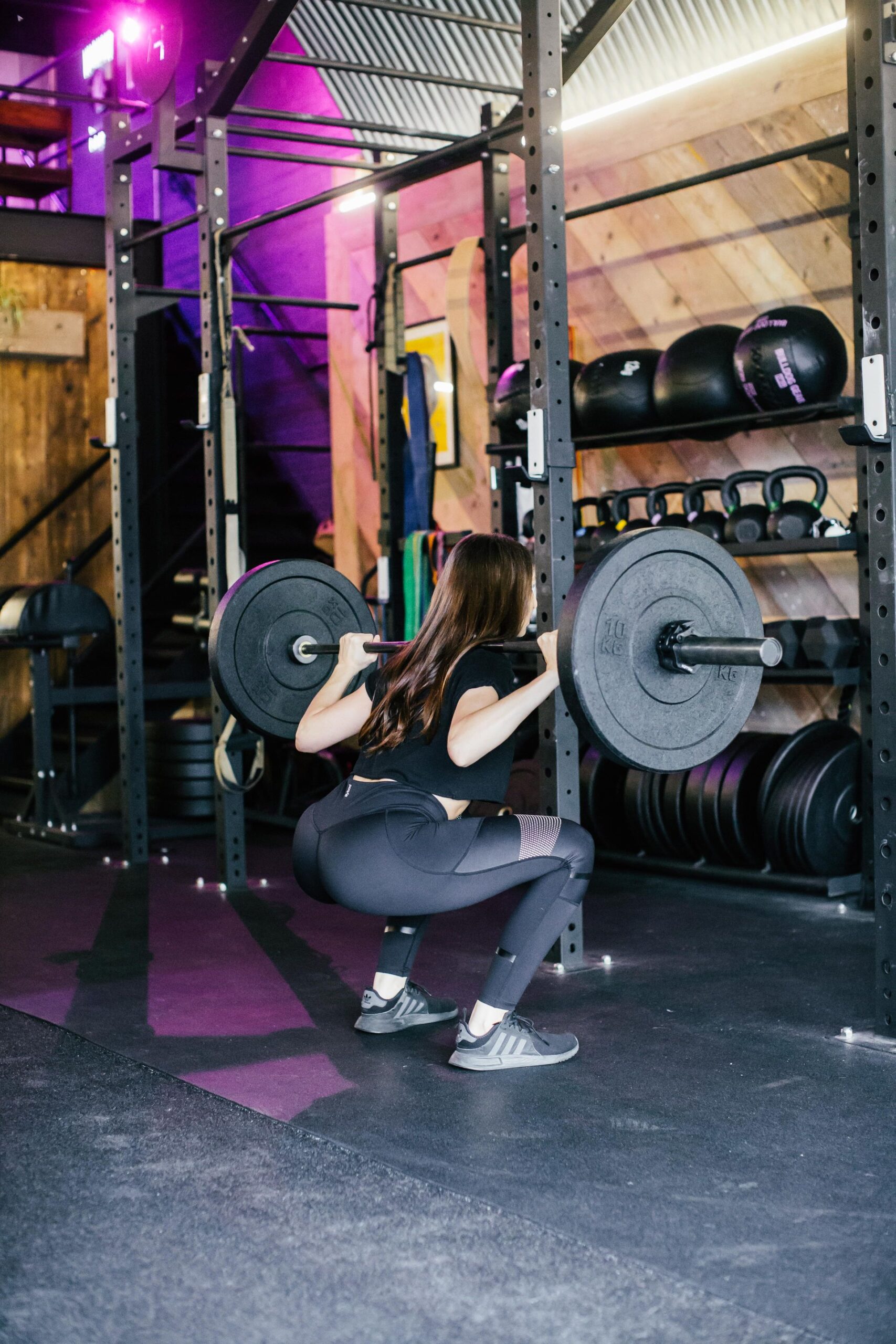
    Bone density. Women lose bone mass faster than men, especially in the perimenopausal and post-menopausal years. The most effective non-pharmacological intervention is heavy resistance training combined with impact loading. Pilates is gentle. Walking is gentle. Heavy squats are not gentle. Heavy squats are what build hip and spine bone density that holds.

    Muscle mass and metabolic health. Skeletal muscle is the largest endocrine organ in the body. The more lean mass you carry, the better your insulin sensitivity, your resting metabolic rate, and your ability to maintain body composition through hormonal changes. Light dumbbells don’t move this needle.

    Joint stability and posture. Pull, hinge, squat, press, the four foundational movement patterns, are what hold the body upright through decades. Trained well, they make a 70-year-old move like a 50-year-old. Untrained, the loss is steady and silent.

    Confidence under load. This is the one that surprises people. The first time you deadlift your own bodyweight, something in how you carry yourself in the rest of your life shifts. This isn’t mystical, it’s a real psychological response to demonstrated competence.

    Why women come to us

    Most of our female members tell us a version of the same story: they’ve done classes, tried HIIT, joined and unjoined a chain gym, and never quite found a place that took their training seriously. They want to lift heavy. They don’t want to do it surrounded by an audience. They want a trainer who actually knows their cycle, their sleep, and their week, not a stranger every Tuesday.

    So we built it. Both our Notting Hill and Chelsea studios have private training rooms with certified female senior trainers, available on request. The programmes are heavy. The coaching is patient. The progression is decades long. The room is yours and your trainer’s, with the door closed.

    What progression looks like

    Year one: foundation. We rebuild the four patterns, add load conservatively, get body composition and recovery markers stable. Most members add lean mass and improve cardiovascular markers in the first quarter. Strength benchmarks roughly double in twelve months.

    Year three: this is when the long game starts to compound. Bone density measurements (DEXA, separate from us) come back markedly improved. Members report sleeping deeper, recovering faster, and, importantly, carrying themselves differently in the world.

    Year five and beyond: this is the population that, in their 60s and 70s, will be carrying their own grandchildren, walking the South Downs without thinking about it, and not having “I used to” conversations.

    The honest invitation

    Strength training, properly programmed, is not a phase you’re too old or too unfit for. It’s the most concrete thing you can do this decade for the next four. If you’d like to talk about what that would look like for you, apply for a Discovery Call.

Apply Now