Practice
Most gym programmes are written for the next eight weeks. Ours are written for the next twenty years. Here’s what changes when you start training that way.
The fitness industry has a short attention span. Eight-week transformations. Six-week shreds. New-year-new-you packages that quietly sunset by March. Most of it is pitched to a brain that wants to feel something change quickly, and most of it leaves the body in roughly the same place a year later.
We don’t train for eight weeks. We train for the next twenty years.
What that means in practice: when we sit down with a new member for their Discovery & Assessment, the first question we ask isn’t “what do you want to look like?” It’s “what do you want to be able to do at 70 that most people can’t?” The answers tell us the actual programme. They reshape what we measure. They change what counts as success.
Three things longevity training optimises for that conventional training ignores
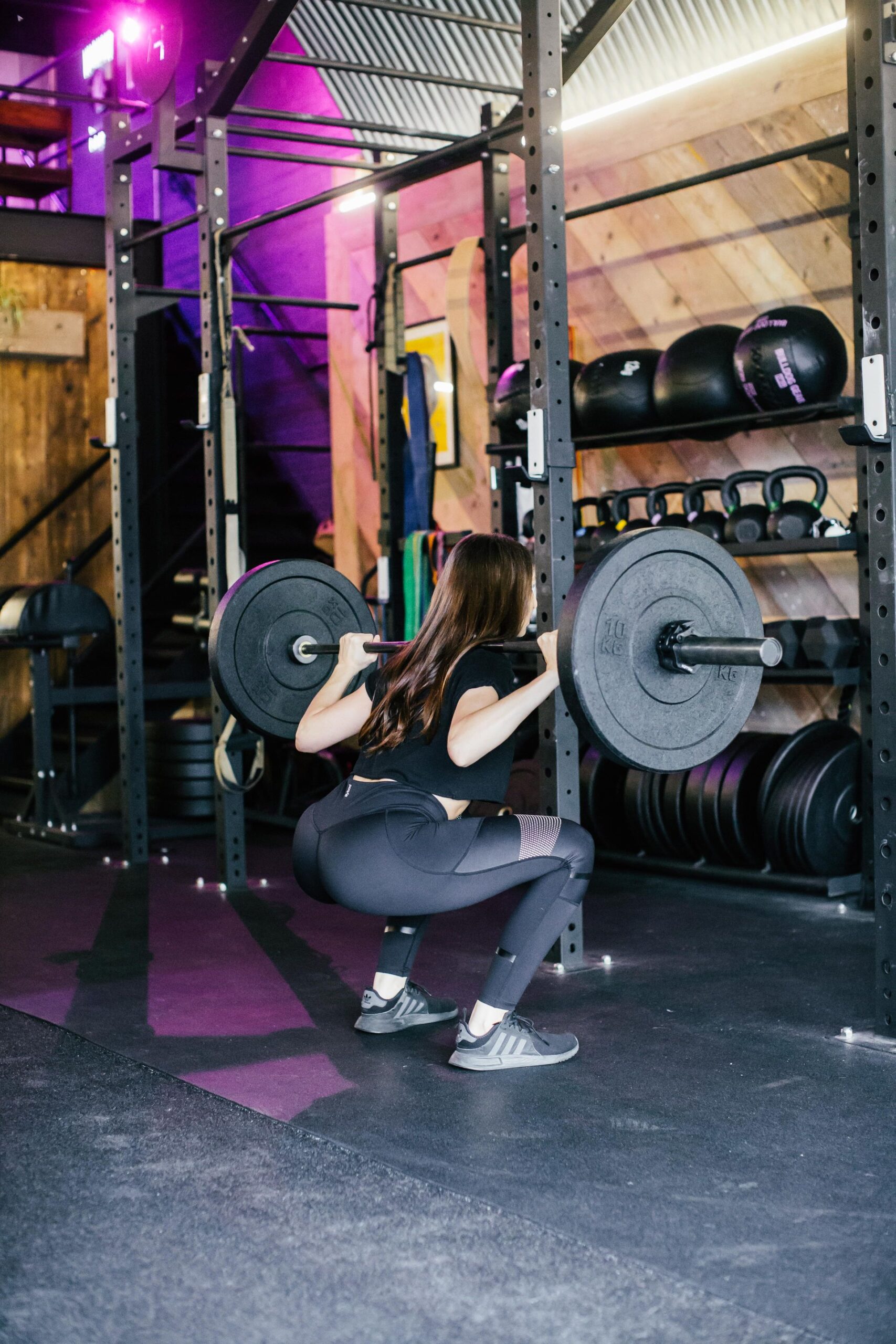
Joint integrity. Most resistance programmes chase the biggest number on the bar. Longevity-led programmes load the joints through controlled range, slow tempo, and progressive intent, building the structural integrity that lets you train hard for decades, not the peak that costs you a shoulder by 50.
Bone density. Bone is a living tissue that responds to load. Train for hypertrophy in your 40s and 50s and you’re writing a deposit into the bank that pays out, daily, in your 70s and 80s, when most people are losing 1–2% of bone mass a year and one fall changes everything. The training is the deposit.
Lean muscle mass. Sarcopenia, age-related muscle loss, starts in the third decade. By the eighth, an untrained adult has lost a third of the lean mass they had at 30. Strength-trained adults lose almost none. The intervention isn’t a supplement or a hack. It’s the programme.
Why we don’t do drop-ins
Longevity training is not a class you can sample. It’s a relationship between you, a senior trainer who knows your history, and a written plan that gets reviewed monthly. Walking into a one-off session, however well-intentioned, produces the same physiological signal as not training at all.
That’s why every member trains with the same trainer, in the same studio, every week. We don’t rotate members through a roster. We don’t do drop-ins. We don’t sell day passes. The continuity isn’t a luxury feature, it’s the entire mechanism by which the work compounds.
What we measure
We track body composition monthly, lean mass, fat mass, visceral fat, hydration. We track strength benchmarks against your own baseline. We track movement quality and range. And we track recovery markers (sleep, perceived effort, soreness) so the programme adjusts to where your body actually is, not where the spreadsheet thinks it should be.
We don’t track followers, calories burned in a session, or anything that confuses motion with progress.
The honest sales pitch
If you want to feel a change in eight weeks, almost any training programme will deliver. If you want to be unrecognisably stronger, more mobile, and more resilient at 70 than you are today, that’s a different commitment, and a different conversation.
That’s the conversation we have on a Discovery Call. If you’d like to begin one, apply here.
Read next: Private personal training in Notting Hill and Kensington & Chelsea, and why Terra Hale is different.